
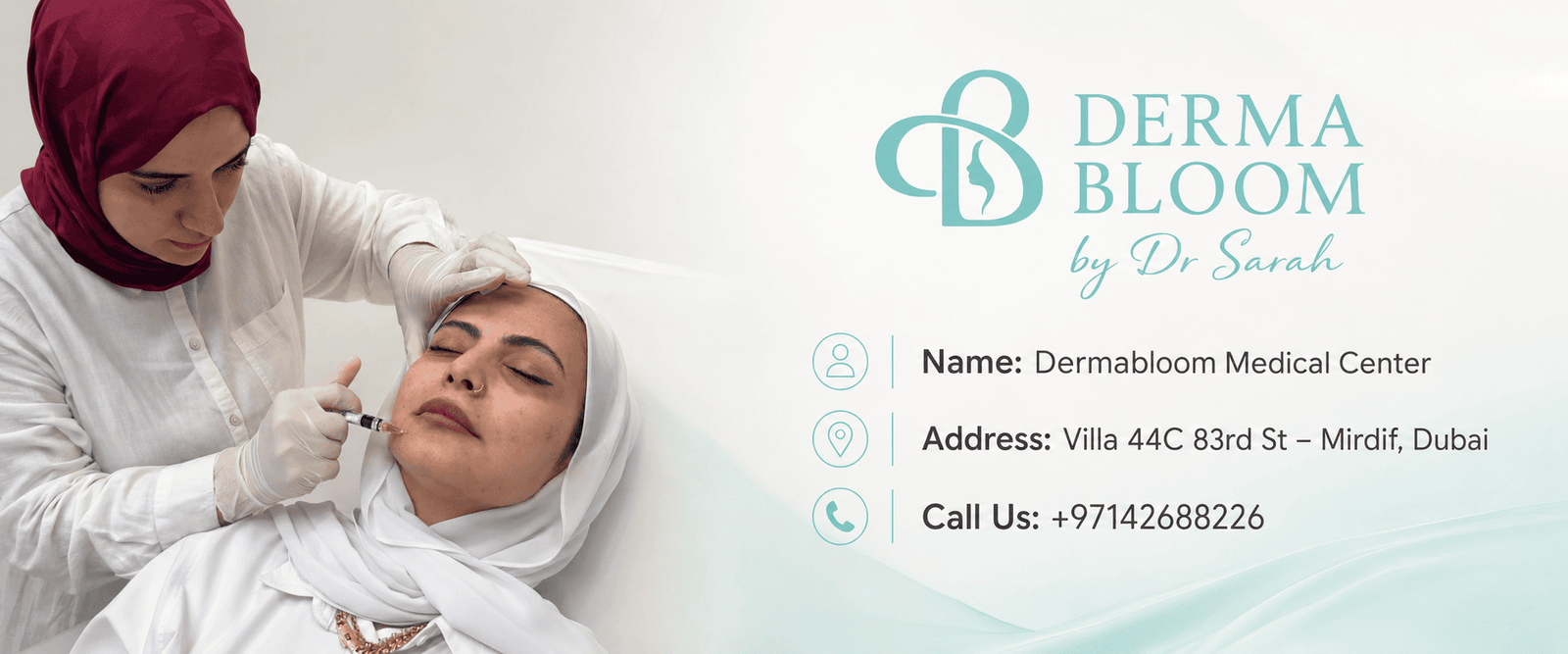
What Happens at a First Dermatology Appointment in Dubai?
Your first dermatology appointment gives you an opportunity to discuss concerns involving your skin, hair, scalp or nails. The doctor will review your symptoms, examine the affected area and explain suitable next steps.
The appointment may focus on a medical condition, an aesthetic concern or both. Your doctor may recommend treatment, further investigation or a follow-up visit after completing the assessment.
This guide explains how to prepare for a first dermatology appointment in Dubai and what you can expect during the consultation.
Who Should Book a Dermatology Appointment?
Consider arranging a consultation when a skin, hair or nail concern persists, returns frequently, causes discomfort or affects your confidence.
Patients commonly visit a skin doctor for:
- Acne and acne marks
- Eczema and dermatitis
- Rashes or persistent itching
- Psoriasis
- Skin infections
- Pigmentation and uneven skin tone
- Hair loss or scalp concerns
- Nail changes
- Warts and skin tags
- New or changing moles
- Fine lines or visible signs of ageing
- Questions about cosmetic skin treatments
You do not need to identify the condition before booking. The consultation helps the doctor investigate the concern and discuss possible causes.
What Should You Bring to Your First Appointment?
A little preparation can help your doctor understand your concern more efficiently.
Consider bringing:
- Your Emirates ID or another accepted identification document
- Your health insurance card, if applicable
- A list of current prescription medicines
- A list of vitamins and supplements
- The names or photographs of your skincare products
- Previous laboratory or biopsy results
- Relevant medical reports
- Details of treatments you have already tried
- Clear photographs showing how the concern has changed
- A written list of questions
Tell the clinic when booking if you need insurance approval, a referral or help obtaining previous medical records.
Should You Stop Using Skincare Before the Appointment?
Do not stop prescription medication unless the prescribing doctor advises you to do so.
For a facial skin concern, attend without heavy makeup when possible. Makeup may hide colour, texture, redness or scaling that the doctor needs to examine.
Remove nail polish when you want the doctor to assess your nails. Avoid applying a heavy layer of moisturiser immediately before an appointment for a rash or dry-skin concern.
Bring your skincare products or take clear photographs of their ingredient labels. The doctor may want to check for irritating ingredients or unsuitable combinations.
What Happens When You Arrive?
The clinic team may ask you to complete a registration form and provide contact, identification and insurance information.
You may also complete a medical-history form. Include accurate information about allergies, pregnancy, breastfeeding, medication, previous procedures and long-term health conditions.
The team may ask about the main reason for your visit so the doctor can prepare for the consultation.
What Will the Dermatologist Ask?
The doctor will start by discussing your concern and how it affects you.
Questions may include:
- When did the problem begin?
- Has it changed or spread?
- Does it cause pain, itching, bleeding or sensitivity?
- What makes it better or worse?
- Which treatments have you tried?
- Which skincare or haircare products do you use?
- Do you take prescription medicine or supplements?
- Do you have allergies or existing health conditions?
- Does your family have a history of similar conditions?
- Have you recently travelled or changed your routine?
Answer as accurately as possible. Small details can help the doctor distinguish between conditions that look similar.
How Does the Skin Examination Work?
The doctor will examine the area that concerns you. They may look at the colour, texture, shape, distribution and other visible features.
The examination may include your:
- Face and neck
- Scalp and hair
- Hands and nails
- Arms or legs
- Back or chest
- Other affected areas
The doctor may use magnification or another clinical examination tool when appropriate. Ask for an explanation if you do not understand any part of the examination.
Tell the doctor if you feel uncomfortable. You can ask questions about privacy, consent and the reason for examining a particular area.
Will You Need Tests?
Many patients do not need tests during their first appointment. The doctor may form an initial assessment from the medical history and physical examination.
However, some concerns may require:
- Blood tests
- Allergy-related investigations
- A skin scraping or swab
- A hair or nail sample
- A skin biopsy
- Clinical photographs for monitoring
- Referral to another medical professional
The doctor should explain why a test may help, what it involves and whether you need insurance approval.
Will You Receive a Diagnosis During the First Visit?
The doctor may identify some conditions during the first consultation. Other concerns require test results, monitoring or additional assessment.
Several skin conditions can produce similar symptoms. The doctor may discuss possible causes while waiting for more information.
A careful doctor will avoid presenting an uncertain assessment as a confirmed diagnosis.
Will Treatment Start at the First Appointment?
The doctor may recommend skincare changes or prescribe medication during the first appointment when the assessment supports that approach.
Some patients need tests, insurance approval or a separate procedure appointment before treatment starts.
Aesthetic procedures may require a dedicated consultation and consent process. The doctor should discuss expected benefits, limitations, alternatives, possible side effects and aftercare before treatment.
Can You Have a Procedure on the Same Day?
Same-day treatment depends on the procedure, available time, medical suitability and clinic policy.
The doctor may postpone a procedure when you:
- Have an active infection or open wound
- Have recently used medication that affects treatment
- Need additional medical information
- Require insurance authorisation
- Need to follow pre-treatment instructions
- Need more time to consider an elective procedure
Do not assume that the clinic will perform treatment during the consultation. Ask when booking if you hope to complete a specific procedure on the same day.
How Will the Doctor Create a Treatment Plan?
The doctor will consider your diagnosis, skin type, medical history, symptoms, previous treatments and goals.
A treatment plan may include:
- Changes to your skincare routine
- Prescription or non-prescription products
- Oral medication
- Diagnostic testing
- An in-clinic procedure
- Lifestyle or trigger-management advice
- Monitoring and follow-up
- Referral to another specialist
Ask the doctor to explain how to use each treatment and which side effects require medical advice.
What Results Should You Expect?
Results depend on the diagnosis, treatment and individual response. Some concerns improve quickly, while chronic conditions may require ongoing management.
The first appointment may not provide an immediate solution. Its main purpose involves understanding the concern and creating a safe, appropriate plan.
No doctor can guarantee a specific result. Ask about realistic outcomes, expected timelines and factors that may limit improvement.
What Risks Should You Discuss?
A consultation and external examination usually involve minimal physical risk. Tests, medicines and procedures may carry specific side effects or complications.
Before agreeing to treatment, ask about:
- Common side effects
- Less common but serious complications
- Medication interactions
- Allergy risks
- Changes in pigmentation
- Scarring or infection risks
- Required recovery time
- Warning signs that need urgent attention
The exact risks depend on the proposed treatment. General online information cannot replace an individual medical assessment.
What Happens After the Appointment?
The doctor or clinic team may provide a written treatment plan, prescription, skincare instructions or test request.
Before leaving, confirm:
- How and when to use each treatment
- Which products you should stop or avoid
- When you should expect improvement
- Which side effects may occur
- When to contact the clinic
- Whether you need a follow-up appointment
Follow the instructions carefully. Contact the clinic if you experience unexpected symptoms or do not understand the plan.
How Long Does a Dermatology Appointment Take?
Appointment length depends on the concern and the complexity of the assessment. Multiple concerns, a detailed medical history or a planned procedure may require more time.
Ask the clinic for an estimated duration when booking. Arrive early if you need to complete registration or insurance forms.
How Many Appointments Will You Need?
Some patients only need one consultation. Others need follow-up appointments to review test results, monitor progress or adjust treatment.
Chronic concerns such as acne, eczema, psoriasis, pigmentation or hair loss may require longer-term management.
Your doctor can suggest a follow-up schedule after completing the initial assessment.
When Should You Seek Urgent Medical Help?
Do not wait for a routine dermatology appointment when symptoms suggest a medical emergency.
Seek urgent medical assistance for symptoms such as:
- Difficulty breathing with a rash or swelling
- Rapid swelling of the lips, tongue or throat
- A rapidly spreading rash with fever or severe illness
- Severe blistering or skin peeling
- A serious reaction after taking medication
- Signs of a rapidly worsening infection
Contact the appropriate UAE emergency service or visit an emergency department when symptoms require immediate care.
Questions to Ask at Your First Appointment
- What may be causing my symptoms?
- Do I need any tests?
- What treatment options can I consider?
- What results can I realistically expect?
- How long might improvement take?
- What side effects should I watch for?
- Could my current products make the problem worse?
- Should I change my skincare routine?
- When should I return for a follow-up?
- When should I contact the clinic urgently?
Frequently Asked Questions
Should I wear makeup to a dermatology appointment?
Attend without makeup when you want the doctor to examine your face. If necessary, bring a gentle remover and remove the makeup before the examination.
Should I bring my skincare products?
Yes. Bring the products or clear photographs of their names and ingredient lists. The doctor can review whether they suit your skin and treatment plan.
Can I discuss more than one concern?
Yes, but tell the clinic when booking. Several concerns may require a longer appointment or separate visits.
Will the doctor examine my entire body?
The examination depends on your concern. Tell the clinic if you want a broader skin examination so it can schedule suitable time.
Can I bring someone with me?
Ask the clinic about its companion policy. A parent, guardian, caregiver or trusted person may attend when appropriate.
Will insurance cover my first dermatology appointment?
Coverage depends on your policy, provider network, referral rules and reason for visiting. Contact your insurer before the appointment.
Will I receive treatment during the first visit?
You may receive advice or medication, but procedures often require separate planning. The doctor must first confirm that the treatment suits you.
How early should I arrive?
Ask the clinic when booking. You may need extra time to complete registration, medical-history or insurance forms.
Book a Dermatology Consultation in Mirdif
Dermabloom Medical Centre provides consultations for skin, hair, scalp and aesthetic concerns in Mirdif, Dubai.
Learn more about
Dr. Sarah Magdy
,
explore
Dermabloom’s services
or
book a consultation
.
Villa 44C, 83rd Street, Mirdif, Dubai, UAE
Telephone/WhatsApp:
+971 4 268 8226
Email:
info@dermabloom.ae
Opening hours: 11:00 AM–8:00 PM
DHA facility licence: 2528391
Medical Review
Proposed medical reviewer:
Dr. Sarah Magdy, DHA-registered Physician-Specialist in Dermatology
Review status: Awaiting practitioner review
Draft date: 18 September 2026
Change the status to “Medically reviewed” only after Dr. Sarah checks and approves the article.
Medical Sources
-
American Academy of Dermatology: How to prepare for a dermatology visit
-
American Academy of Dermatology: Taking useful photographs of your skin
-
Dubai Health Authority: Guidelines for Patient Consent
This article provides general educational information. It does not replace an individual medical consultation, diagnosis or treatment plan.